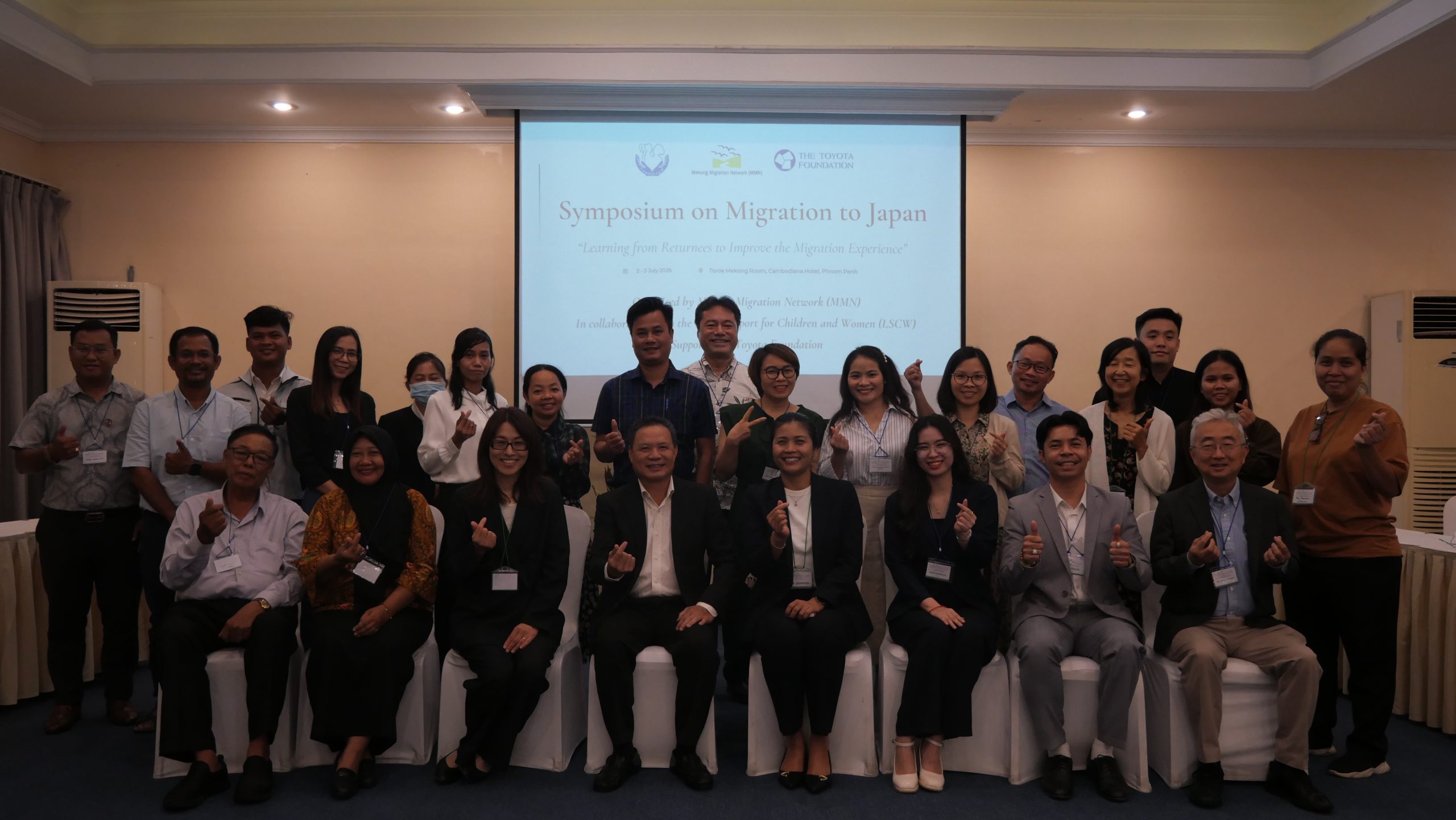
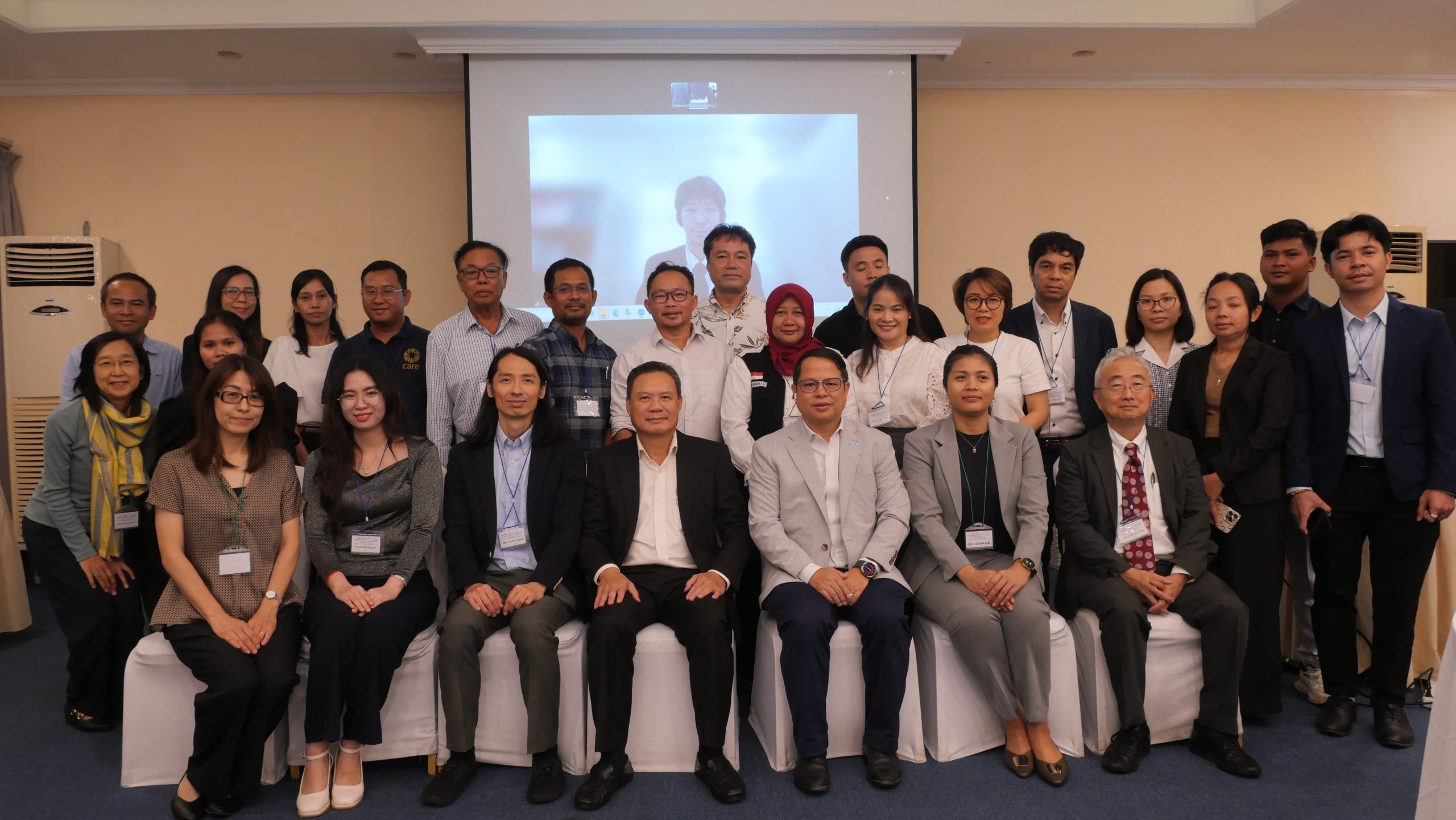
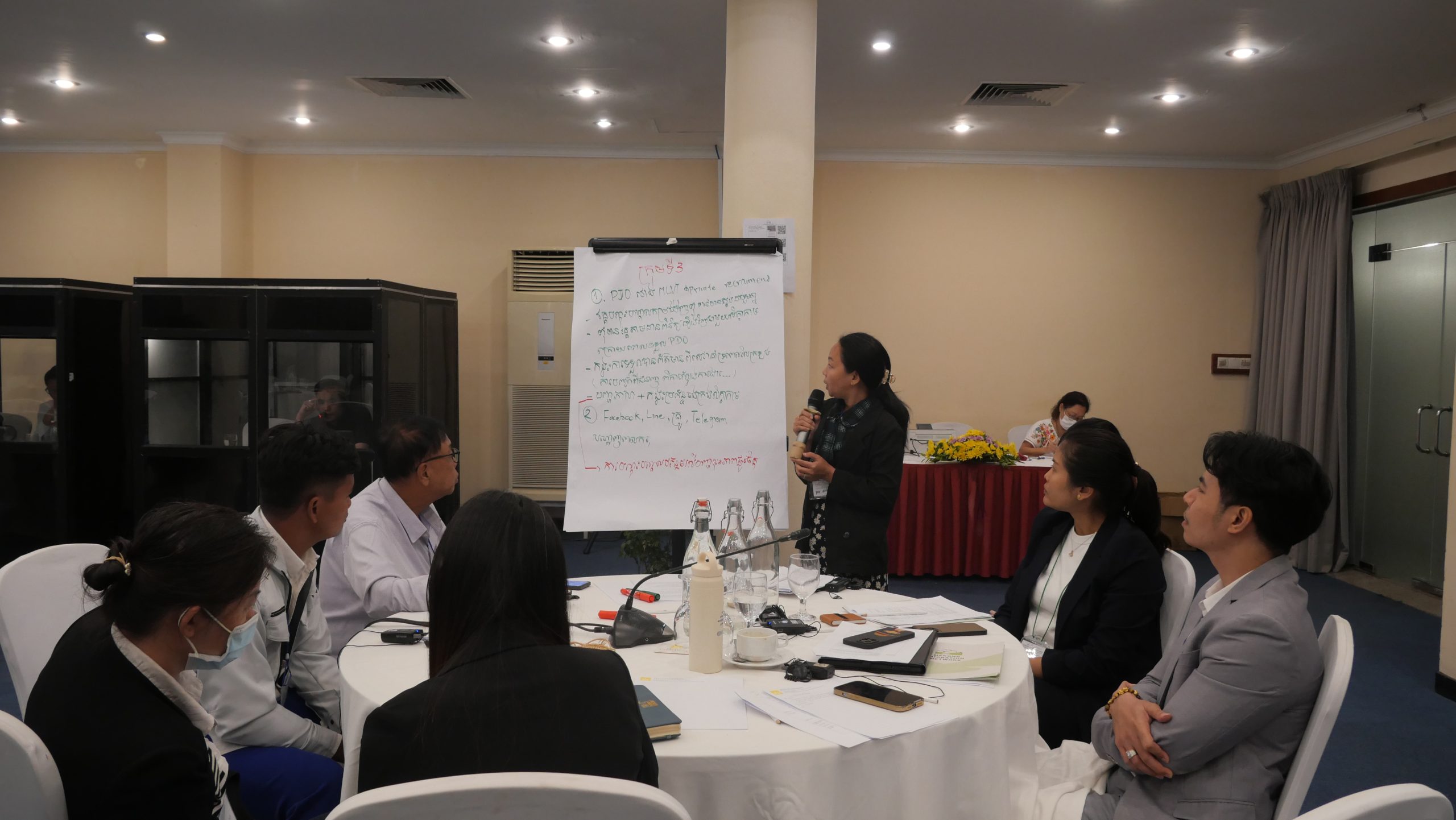
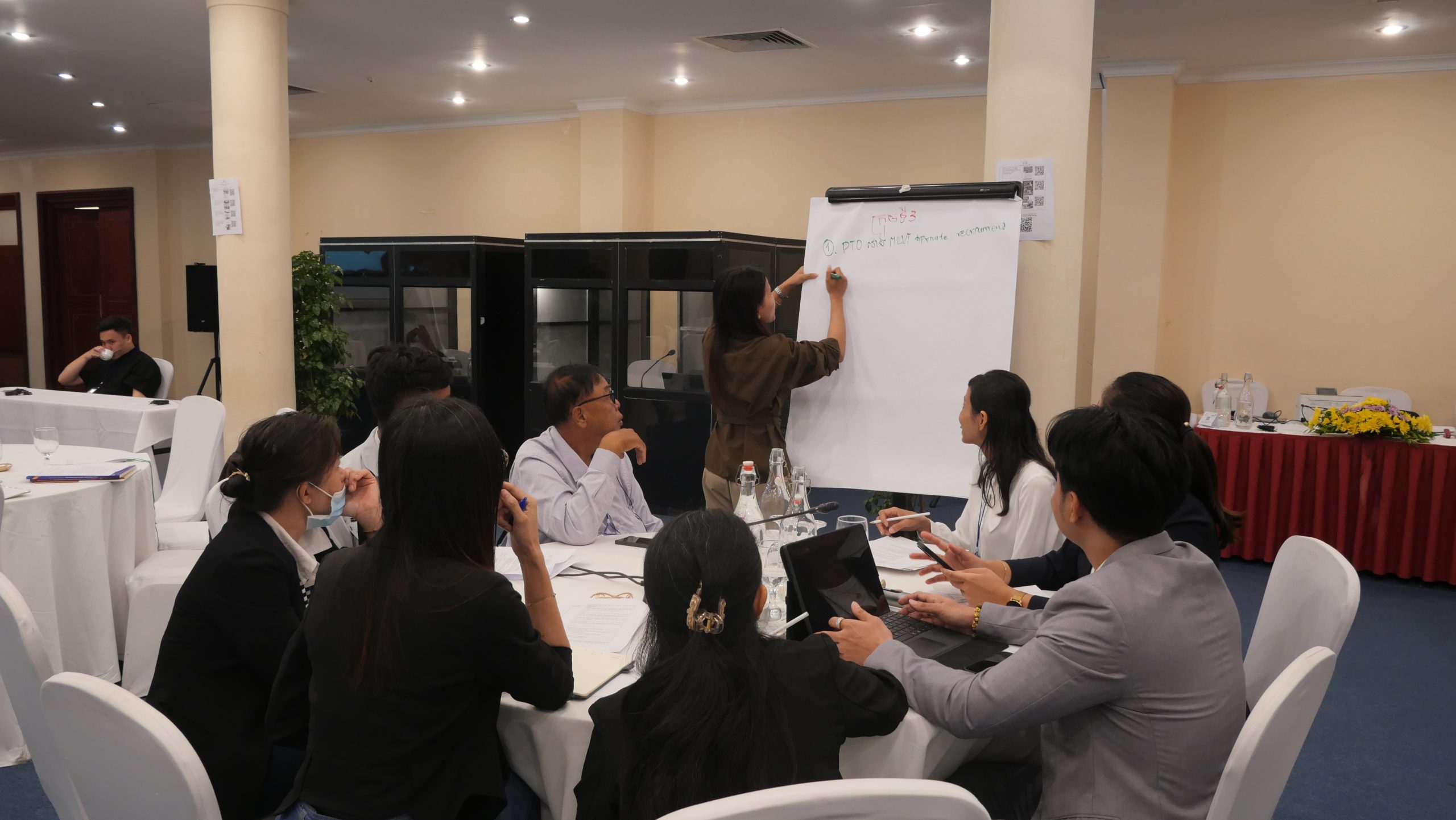
On 2-3 July 2026, the Mekong Migration Network (MMN), in collaboration with Legal Support for Children and Women (LSCW) and with support from the Toyota Foundation, held a symposium on “Migration to Japan: Learning from Returnees to Improve the Migration Experience”. The event in Phnom Penh, Cambodia, brought together more than 30 stakeholders. Participants included recruitment agency representatives, local and international Civil Society Organisations (CSOs), the International Labour Organization (ILO), the Cambodian Ministry of Labour and Vocational Training (MLVT), Vietnam’s Employment Service Center (ESC) and Women’s Union, migrant returnees, and academic experts.
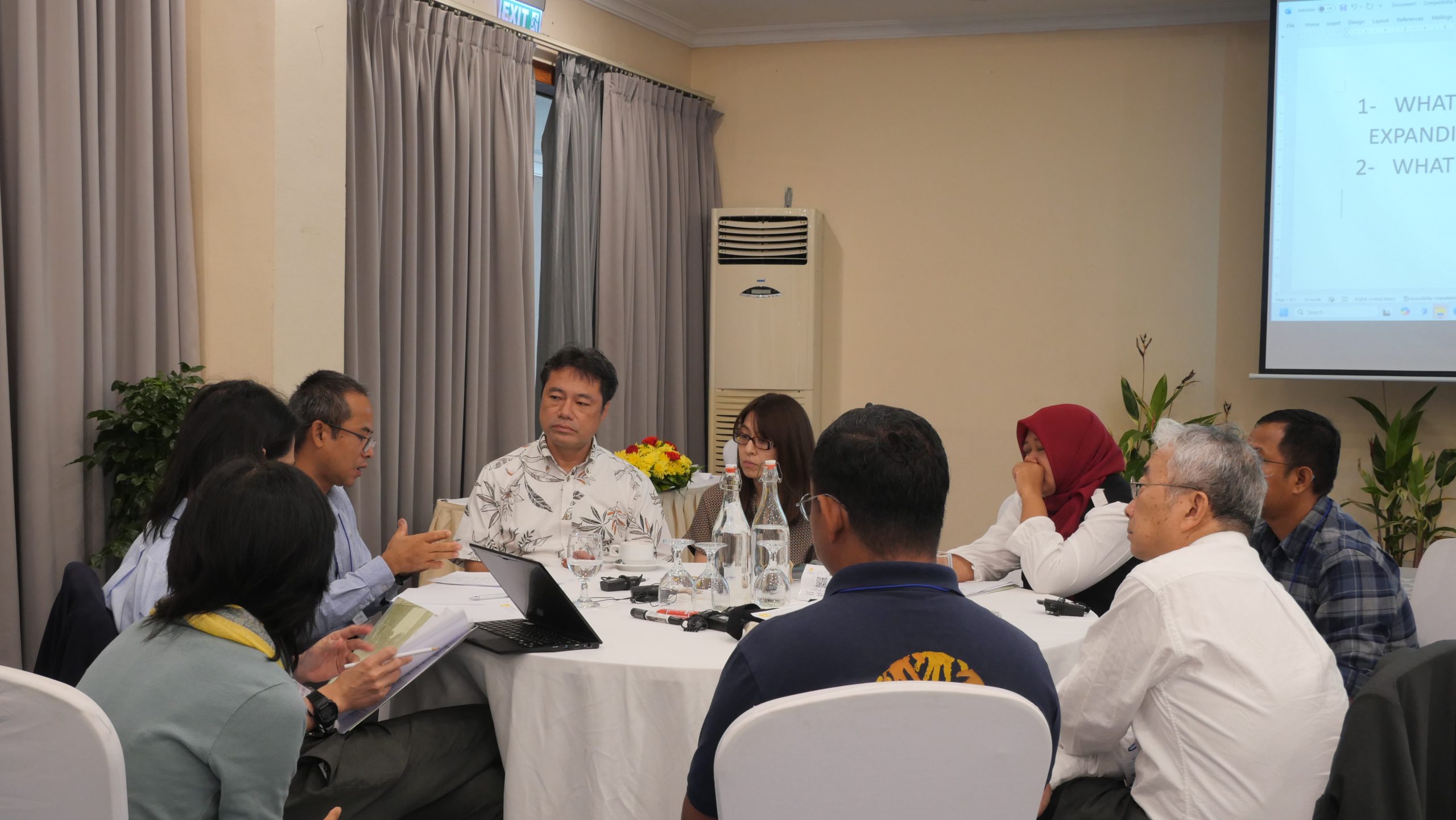
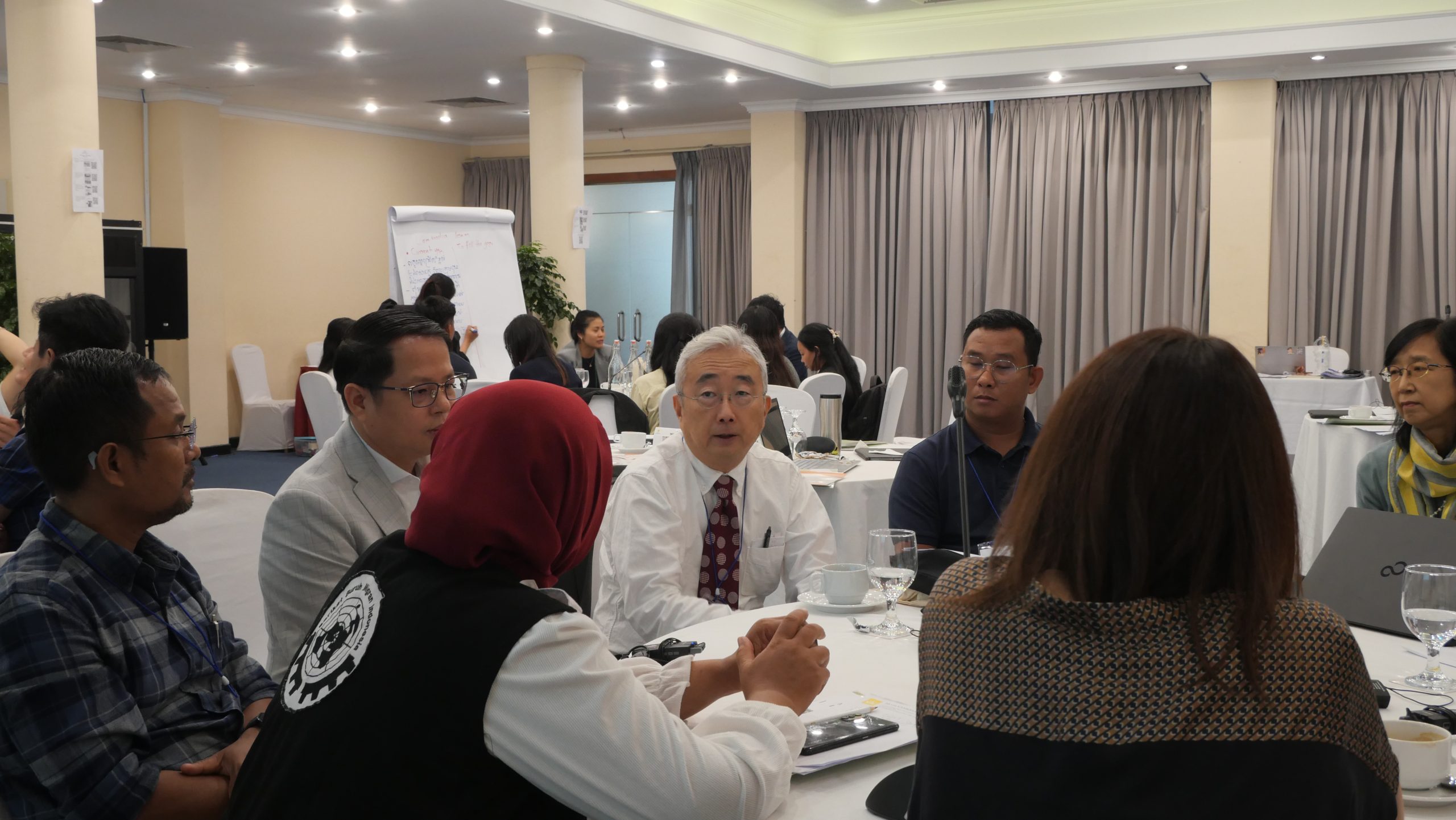
In her opening remarks, Ms. Reiko Harmia, MMN’s Regional Coordinator, welcomed participants and outlined the event’s objectives. Drawing on insights from MMN’s Migrant Exchange Forums held in Vietnam and Cambodia in November 2025, she explained that the symposium sought to address some of the key issues identified by migrant returnees from Japan. Discussions were organised around three guiding questions: how can migrants be better informed of their rights and available support, what measures can countries of origin take to reduce recruitment fees and related costs, and what efforts are underway in Japan to address these financial burdens. Each question was addressed in a separate plenary, followed by small group discussions. A concluding roundtable broadened the discussion to migration and development.
During the first plenary, Ms. Nara Monilak from Cambodia’s MOLVT outlined the development of pre-departure orientation curricula and its positive impact, including fewer cases of migrant workers “disappearing”, without formally terminating their contracts, and reduced health risks. Mr. Mom Sokcha of LSCW discussed some of the challenges Cambodian workers face in accessing accurate information, emphasising that
“Access to information is a right. With accurate information, informed decision-making, better migration planning, safe and regular migration, reduced risks of rights violations, and smoother workplace adaptation become possible.”
Mr. Dao Xuan Hung from the ESC in Ha Tinh, Vietnam agreed that prospective migrant workers often have limited access to official information. In so doing, he highlighted the ESC’s plan to expand its outreach to households through stronger collaboration with the local authorities.
In the second plenary on the impact of high recruitment fees, Ms Tinh Le Ut from the Center for Development and Integration (CDI) in Vietnam presented data on fees paid by Vietnamese migrant workers to Japan. She also outlined the wide‑ranging negative consequences of high fees, including debt-related stress, reduced savings, an increased risk of becoming undocumented, diminished bargaining power in the workplace, heightened vulnerability to exploitation, and a general weakening of migration’s developmental benefits.
Recruitment agency associations from Cambodia and Vietnam then shared their perspectives regarding fair recruitment. Mr. Pin Vireak of the Association of Labour Migration Agencies of Cambodia (ALMAC) explained that 30 member agencies are certified under ALMAC’s Code of Conduct, which commits them to a zero-fee recruitment model. Mr. Le Van Thanh of the Vietnam Association of Manpower Supply (VAMAS), emphasised the importance of eliminating brokers to reduce migrants’ financial burden.
Day two opened with remarks from Mr. Hideo Tone of the Toyota Foundation, who emphasised the need to reduce recruitment fees not only for migrant workers but also for employers and the wider community. The third plenary focused on Japan’s new “Employment for Skills Development” scheme, which is due to replace the Technical Intern Training Programme (TITP) in 2027. Mr. Kei Sugihara from the Embassy of Japan in Vietnam explained that there would be a new fee ceiling under the scheme and stressed that employers must go beyond mere compliance to actively reduce costs. Mr. Shinichi Okubo of the Japan Platform for Migrant Workers towards Responsible and Inclusive Society (JP-MIRAI) introduced their Fair and Ethical Recruitment Initiatives (FERI), which includes technical support to Japanese employers and recruitment agencies to phase-out recruitment fees charged to migrant workers. The initiative is currently being implemented in Nepal and Indonesia. Mr. Okubo noted that
“In Nepal, a FERI-registered recruitment agencies received many applications, enabling Japanese employers to hire more competitive workers with higher proficiency in the Japanese language.”
Prof. Wako Asato of Kyoto University shared lessons from the Philippines, where recruitment fees are prohibited for workers migrating to Japan under the TITP and Specified Skilled Workers schemes. As a result, Filipino workers are less likely to incur debt and therefore less likely to leave their employer for higher wages in the informal economy. Prof. Asato also noted that institutional protections for migrants have been strengthened through the establishment of the new Department of Migrant Workers.
The final plenary broadened the discussion to migration’s role in development and the reintegration of returnees. Mr. Phan Pearey, a migrant returnee, shared his experiences and explained how careful career planning before departure enabled him to establish a business in Cambodia following his return from Japan. Mr Khim Sosamrach from Cambodia’s MLVT outlined various government initiatives, including the Ministry’s mobile app to improve access to information, and its collaboration with the Ministry of Interior to support returning migrants. Ms. Nguyen Thi Nhu Quynh from the Quang Tri Women’s Union in Vietnam described their support for female returnees, including information dissemination, assistance with business start-ups, and psychological support delivered in collaboration with hospitals, the police, and international organisations. Ms. Dina Nuriyati, representing Serikat Buruh Migran Indonesia (SBMI) and Indonesia’s Migrant Workers Resource Centres, highlighted their initiatives to organise migrant workers across all stages of the migration cycle, while ensuring their voices are more effectively reflected in policymaking. Mr. Veth Vorn from ILO stressed that while migration benefits countries of origin and destination, benefits for migrants themselves remain limited. He called for better protection for migrant returnees, including re-skilling, and reintegration measures. Finally, Mr. Mom Sokcha of LSCW challenged the narrow focus on remittances in the global migration discourse, urging greater recognition and respect for migrants’ rights beyond their economic contributions.
The symposium concluded with a discussion to identify priority action points and potential areas of collaboration. The MMN Secretariat has synthesised these discussions, for publication in the forthcoming proceedings of the symposium.